
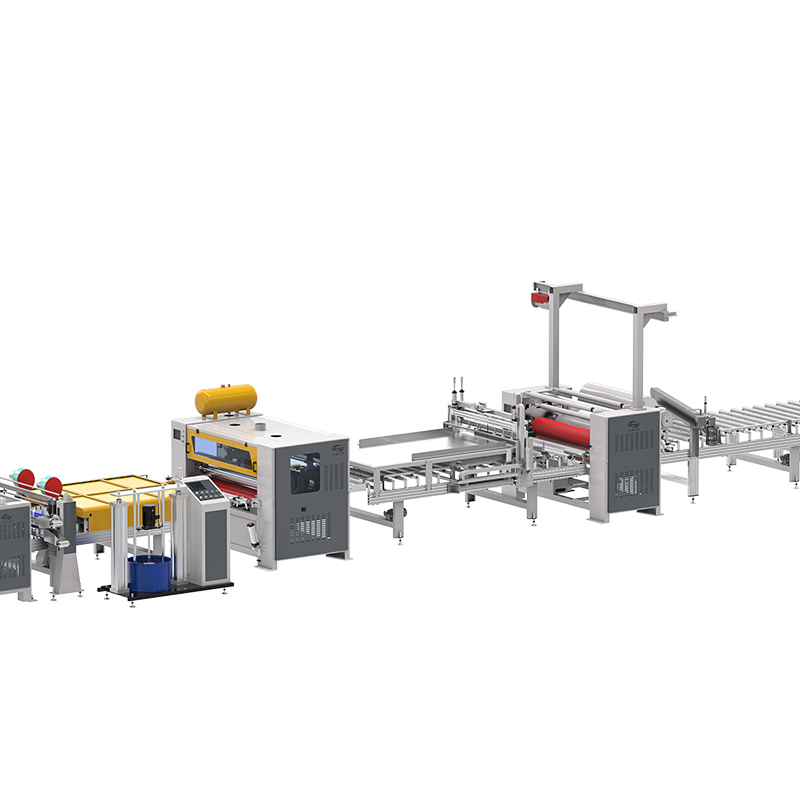
Dust Cleaning Equipment for PUR Laminating Lines: Four Types and Specifications
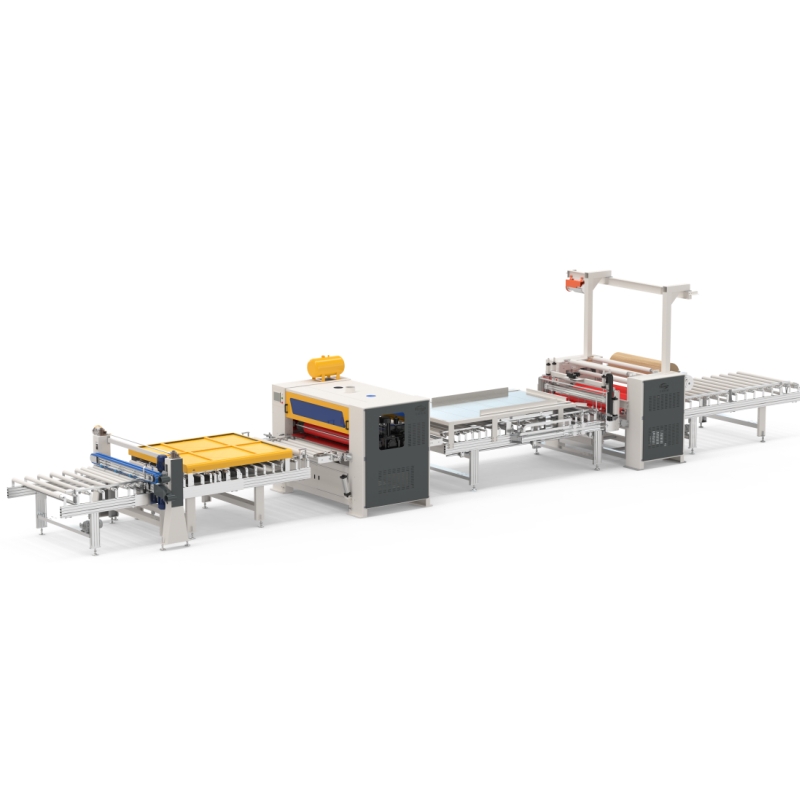
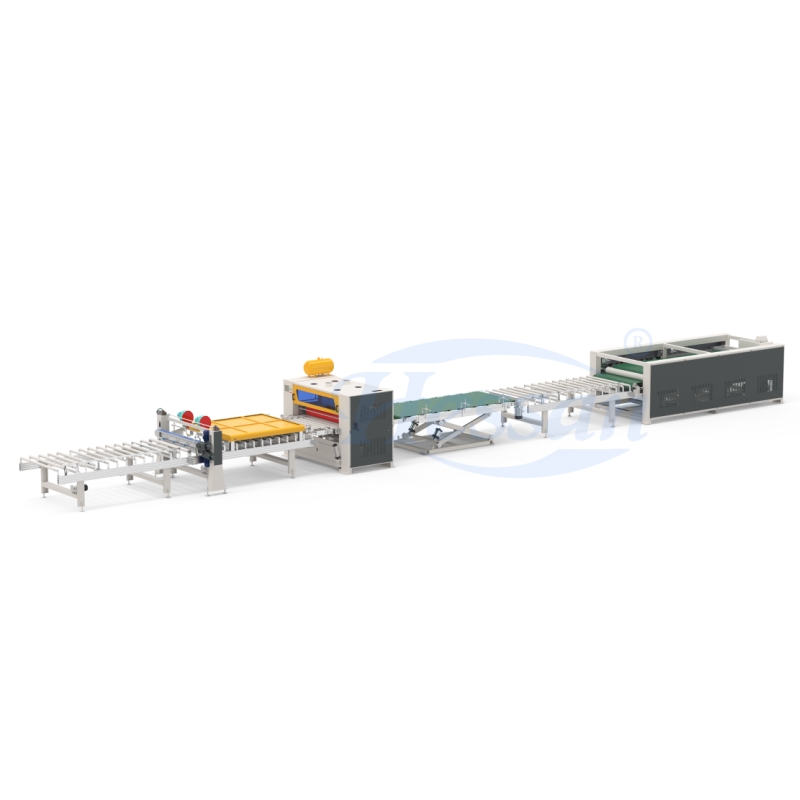
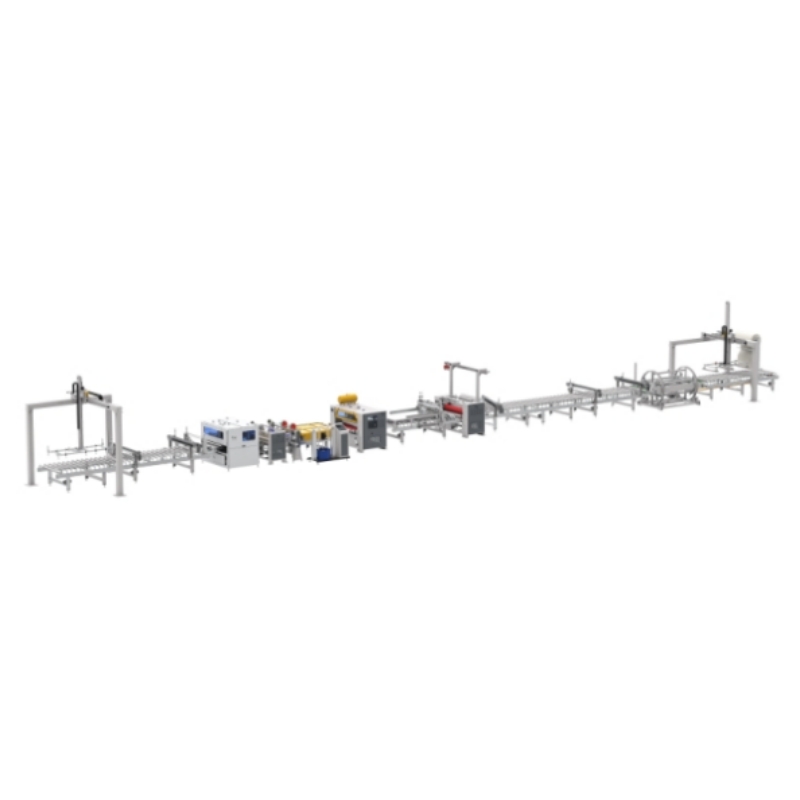
This article presents the four dust-cleaning machines used in our PUR laminating line. They are arranged in a sequential train—from coarse to fine—to ensure a contaminant-free board surface prior to adhesive application.
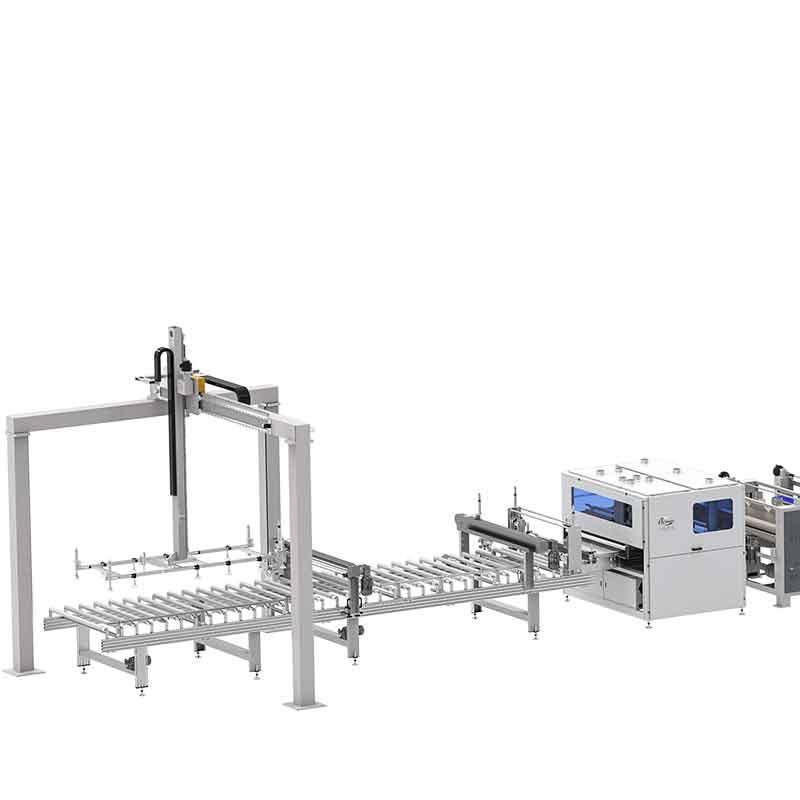
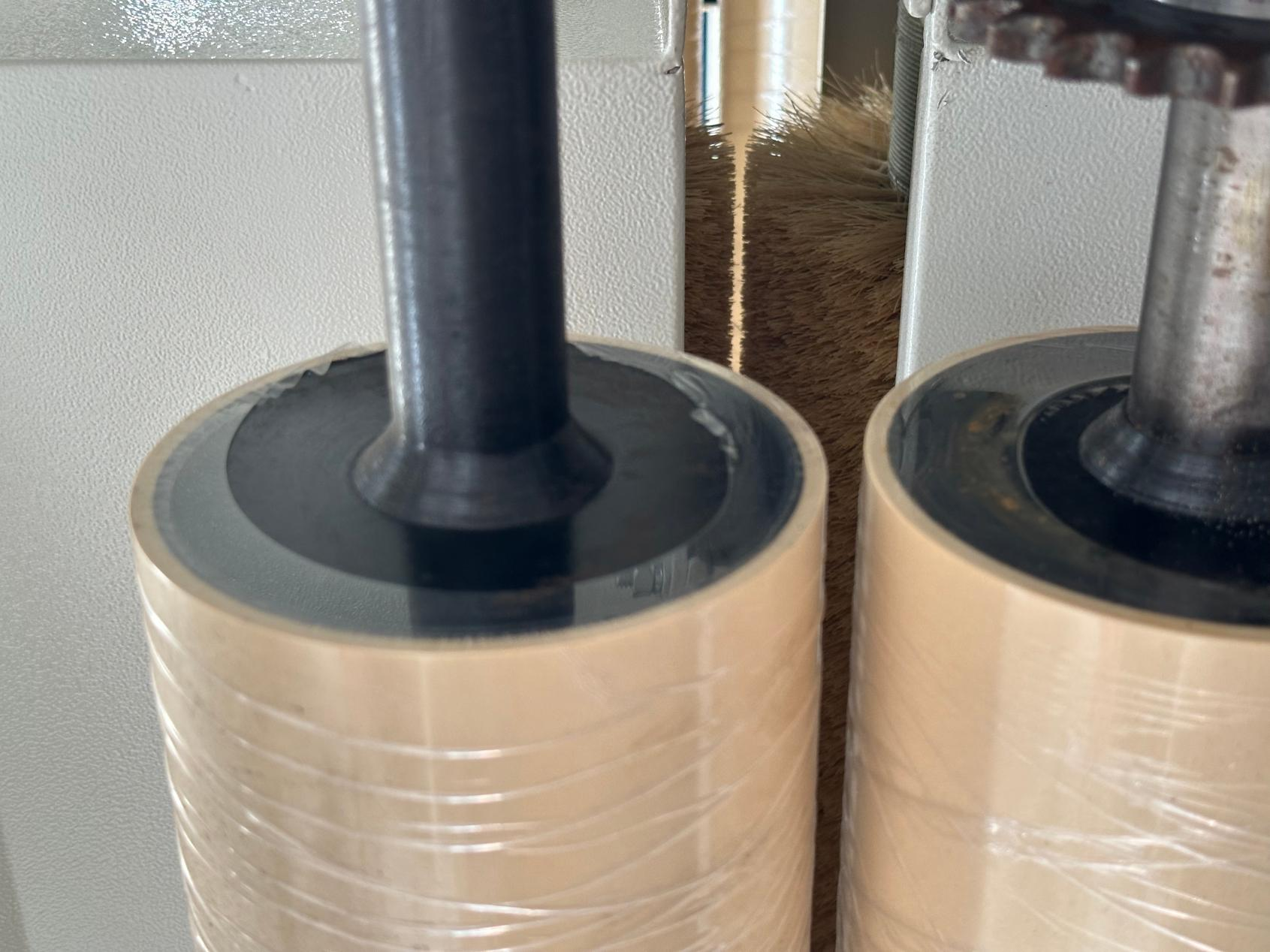
1. Double-sided Brush Cleaning Machine
Purpose: Removes large particles (sawdust, fibre fragments, edge trimmings) from both board faces.
Components: Two counter-rotating sisal rollers.
Roller diameter: 190 mm
Effective length: 1350 mm
Mechanism: Stiff natural bristles mechanically sweep off coarse debris.
Total power: 2.6 kW.
This is the first defence against scratches and clogging of downstream filters.
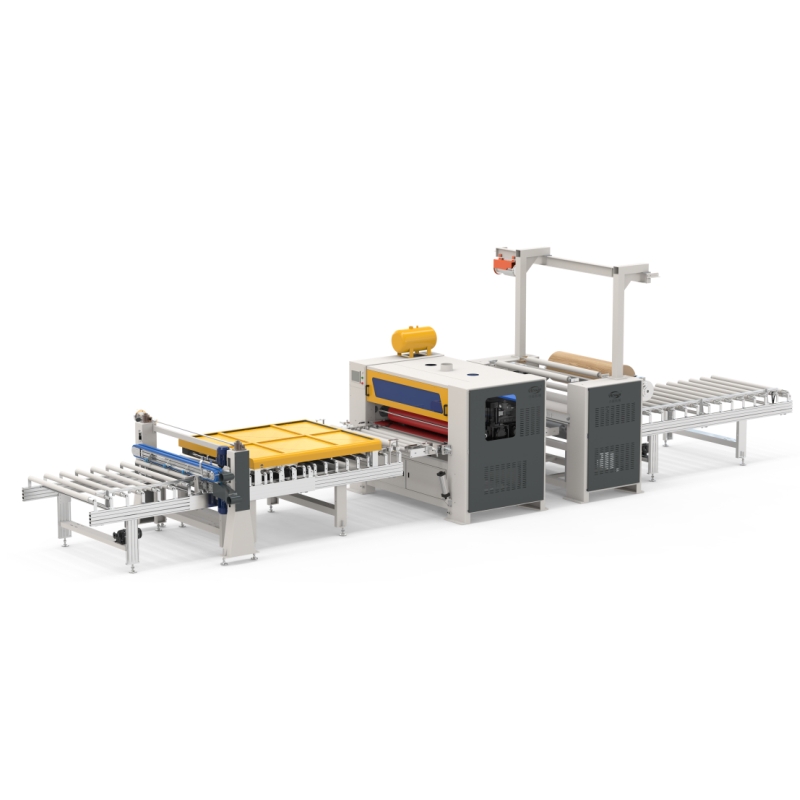
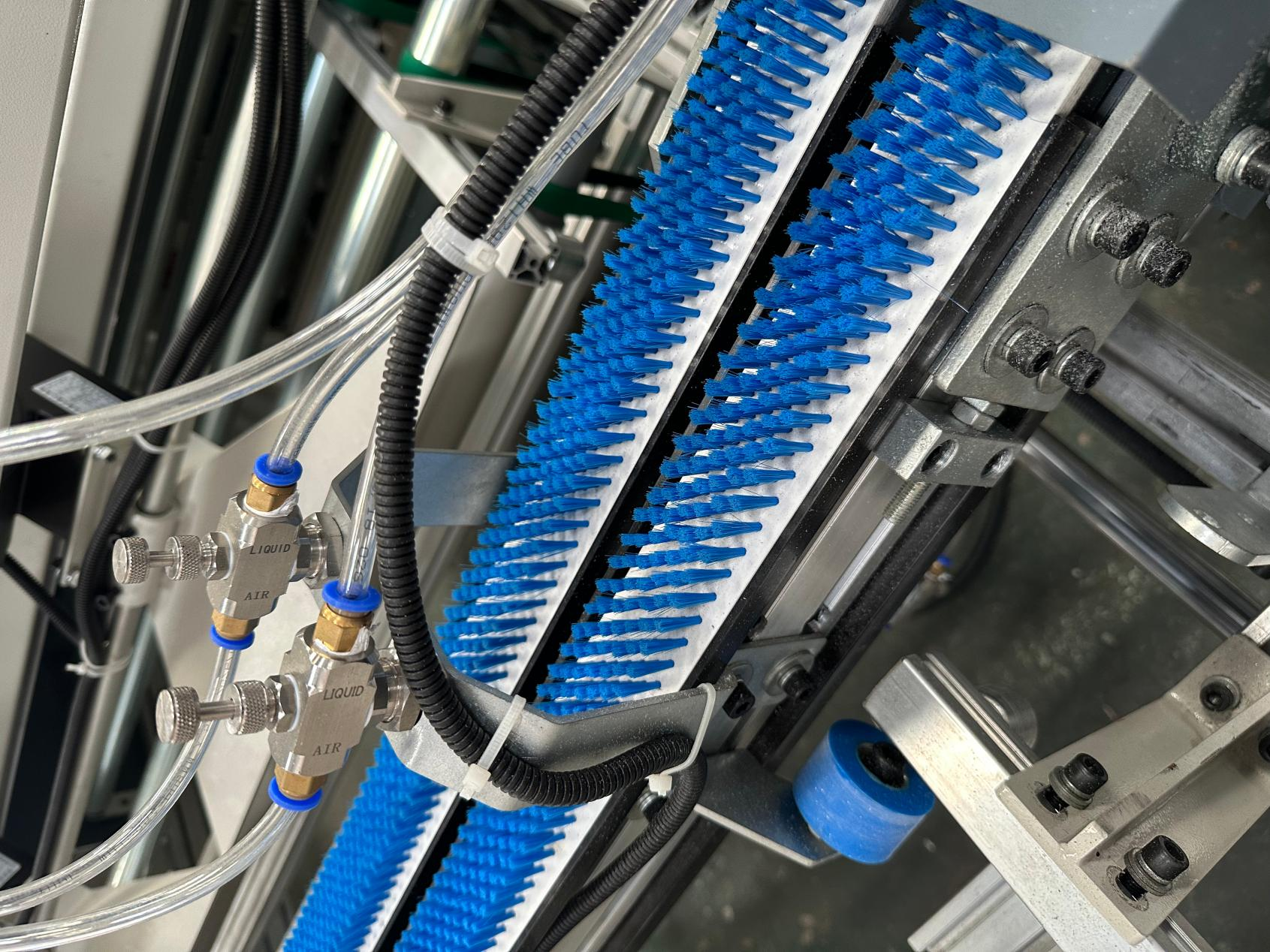
2. Belt-brush Cleaning Machine
Purpose: Eliminates medium and fine dust (≤50 µm) remaining after coarse brushing.
Components: Three continuous abrasive belts that gently contact the board surface.
Special feature: An integrated anti-static water spray system moistens the belts, neutralising static charges and causing fine particles to adhere to the belts rather than re-entering the air.
Total power: 1.5 kW.
This stage significantly reduces particle counts before the board enters the clean room.
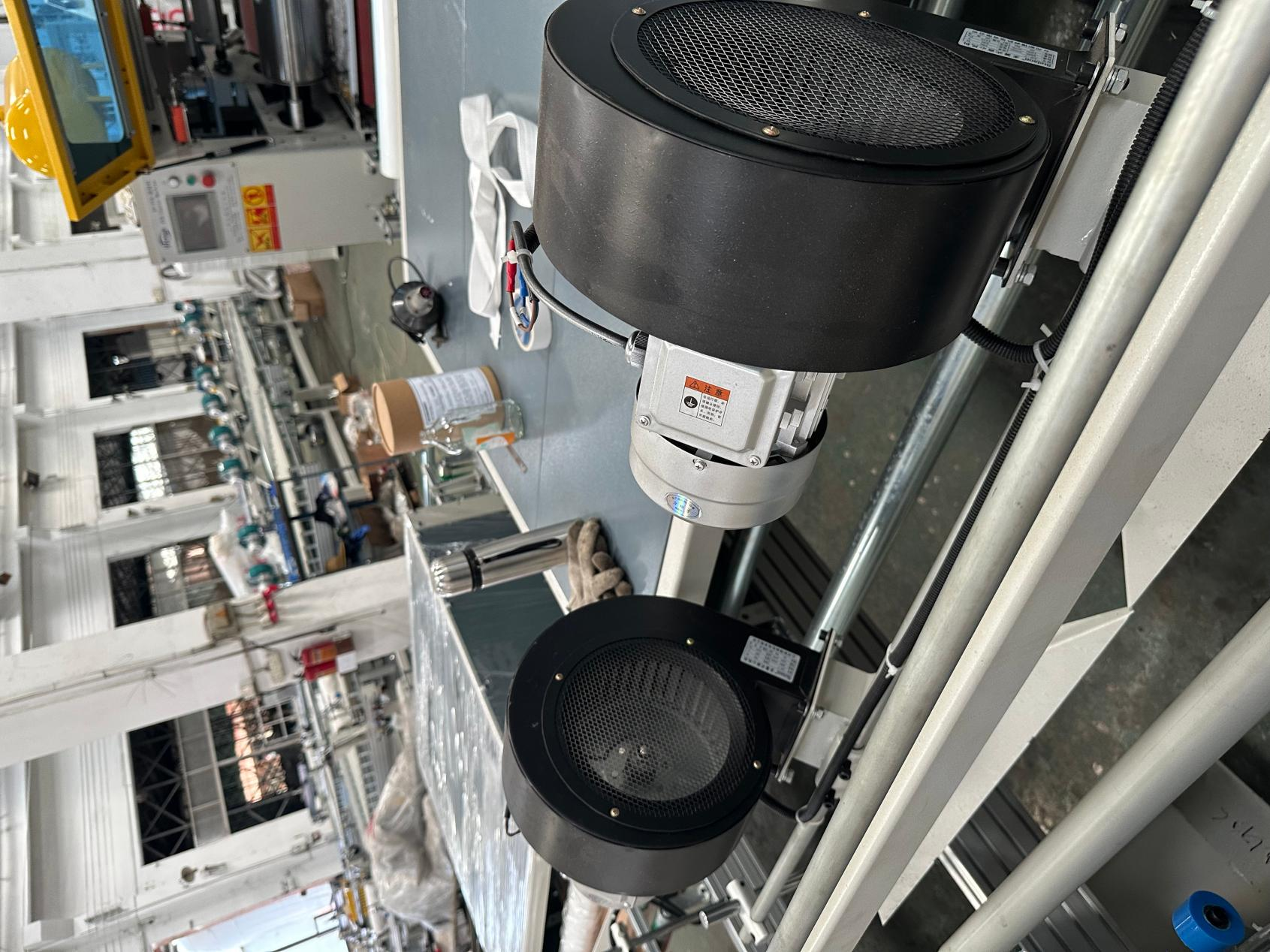
3. Powerful Dust Blower
Purpose: Removes any loose dust that survives the previous steps, just before the board moves into the dust-free room.
Location: Mounted at the clean-room entrance.
Mechanism: A high-velocity air curtain blows off residual floating particles and simultaneously dries any trace moisture from the anti-static spray.
Total power: 1.5 kW.
It acts as the final pneumatic clean-up, ensuring only thoroughly blown boards proceed further.
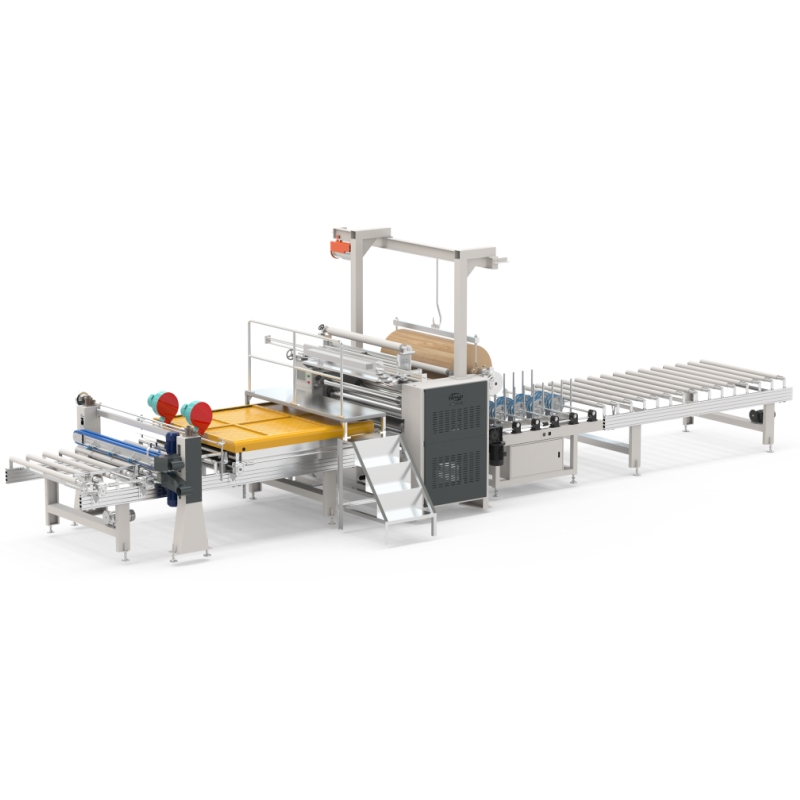
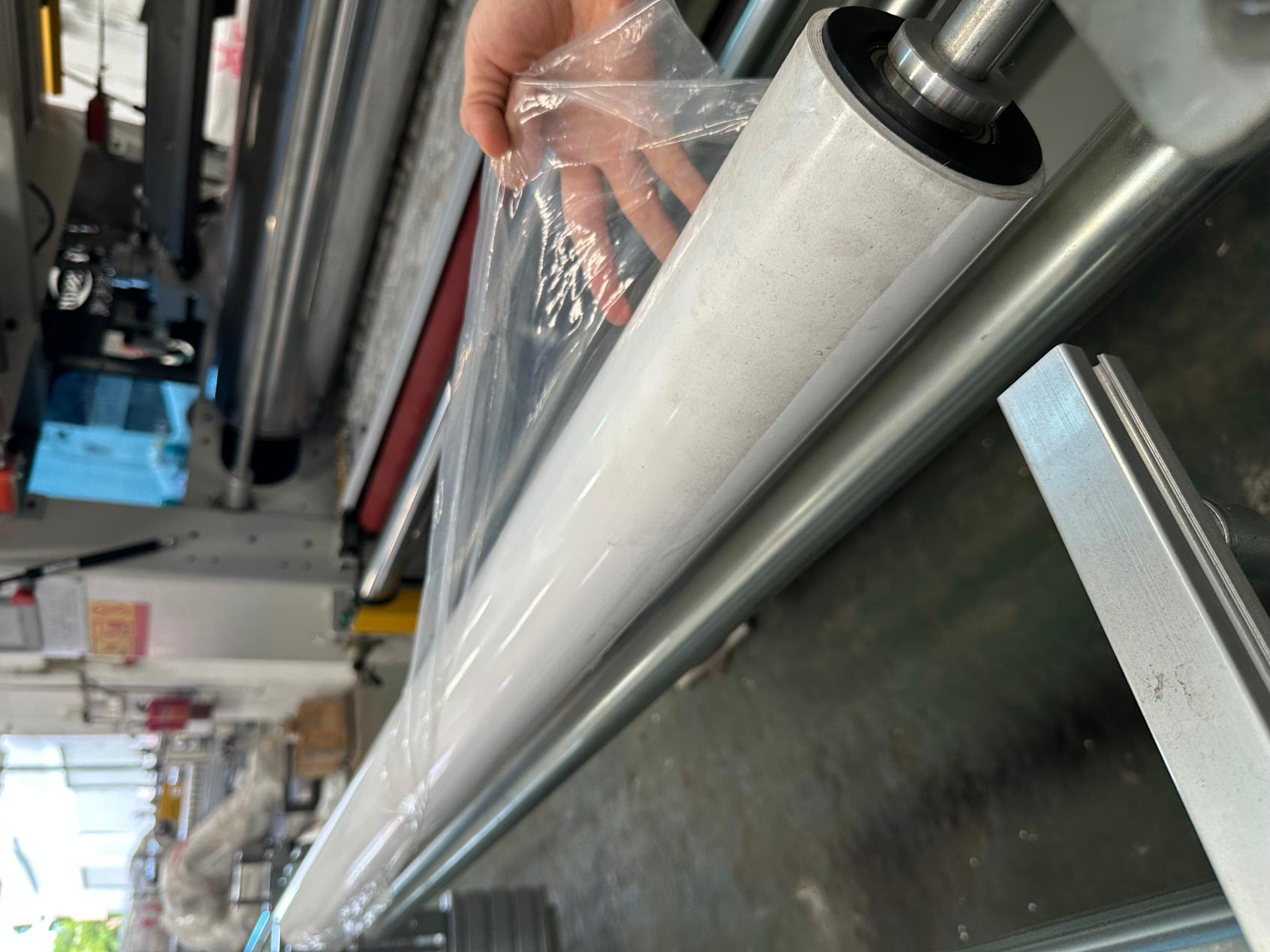
4. Dust Sticky Roller
Purpose: Eliminates stubborn, electrostatically attached, or slightly tacky dust that mechanical and air methods cannot remove.
Components: A roller covered with a replaceable high-tack adhesive film.
Mechanism: Direct contact—the sticky film picks up particles by adhesion as the board passes underneath.
Consumable nature: The film wears out and must be replaced periodically, but its effectiveness in achieving near-zero surface contamination is unmatched.
This is the ultimate guarantor of adhesive bond quality, especially for high-gloss or decorative PUR laminates.
Operational Sequence
The four machines operate in a fixed order:
Coarse brushing → fine brushing → air blowing → sticky rolling
Each unit handles a specific dust category, and together they form a complete cleaning chain.
This systematic approach minimises rejects, improves PUR adhesive wetting, and extends the life of downstream tooling.
For detailed technical drawings, maintenance schedules, or custom configurations, please refer to our engineering documentation or contact our support team.
